


-
In total there are 20 users online :: 1 registered, 0 hidden and 19 guests (based on users active over the past 60 minutes)
Most users ever online was 813 on Mon Apr 15, 2024 11:52 pm
Lee Strobel under fire
Forum rules
Do not promote books in this forum. Instead, promote your books in either Authors: Tell us about your FICTION book! or Authors: Tell us about your NON-FICTION book!.
All other Community Rules apply in this and all other forums.
Do not promote books in this forum. Instead, promote your books in either Authors: Tell us about your FICTION book! or Authors: Tell us about your NON-FICTION book!.
All other Community Rules apply in this and all other forums.
-
tat tvam asi

-
Reading Addict
- Posts: 1367
- Joined: Sat Dec 19, 2009 7:57 pm
- 14
- Location: Florida
- Has thanked: 571 times
- Been thanked: 549 times
-
ant

-

- BookTalk.org Hall of Fame
- Posts: 5935
- Joined: Thu Jun 02, 2011 12:04 pm
- 12
- Has thanked: 1371 times
- Been thanked: 969 times
Re: Lee Strobel under fire
certain aspects of the life of francis of assisi, who lived some 800 years go, are showing the beginnings of mythology (discrepancies of accounts of his life, acts, sermons, etc)
and that was ONLY 800 years ago! But there's little doubt that he existed.
imagine how he might be portrayed in another, oh, 1200 years?
continuing to harp on the discrepancies found in the gospels does not sway the general consensus of historical scholars, who base their belief that Christ existed on the available evidence.
this looks more and more like a war against Christianity in general and no other religion.
let's start doubting the existence of Mohammed. or is that not the politically correct thing to do?
Christianity is the soft target here because we don't have to worry about being executed for ridiculing it. that is sort of intellectual cowardice.
If you are going to be bold about this, then so am I.
and that was ONLY 800 years ago! But there's little doubt that he existed.
imagine how he might be portrayed in another, oh, 1200 years?
continuing to harp on the discrepancies found in the gospels does not sway the general consensus of historical scholars, who base their belief that Christ existed on the available evidence.
this looks more and more like a war against Christianity in general and no other religion.
let's start doubting the existence of Mohammed. or is that not the politically correct thing to do?
Christianity is the soft target here because we don't have to worry about being executed for ridiculing it. that is sort of intellectual cowardice.
If you are going to be bold about this, then so am I.
-
tat tvam asi
-
Reading Addict
- Posts: 1367
- Joined: Sat Dec 19, 2009 7:57 pm
- 14
- Location: Florida
- Has thanked: 571 times
- Been thanked: 549 times
Re: Lee Strobel under fire
The above videos are more addressed to exposing Lee Strobel in flat out lies in favor of trying to shore up the faith. I don't believe that lying in order to promote truth is the best way to go about trying to shore up the faith in the bible. Probably a better approach would be to admit to the error and concentrate more on pure faith free and clear of trying to make historical and empirical claims that clearly can not be supported with evidence. Strobel's clearly caught with his pants down around his ankles, one positive claim after another. And how exactly does that help his cause?
Then you must not be looking very far, for instance: Suns of God: Krishna, Buddha, and Christ unveiled
http://freethoughtnation.com/forums/vie ... 5&start=60
So to answer your question, no, this is not a war aimed at Christianity and no other religion. There's no intellectual cowardice going on at all, so it seems you're assuming incorrectly once again. And it isn't a war on any religion unless of course you consider healthy skepticism as warfare. You'd actually be an idiot NOT to question everything, especially supernatural and sensational claims of religion....
Ant wrote:this looks more and more like a war against Christianity in general and no other religion.
Then you must not be looking very far, for instance: Suns of God: Krishna, Buddha, and Christ unveiled
And so I'll go ahead and return the favor once again by being so bold as to direct you right to the very question boggling your mind at the moment:Ant wrote:let's start doubting the existence of Mohammed. or is that not the politically correct thing to do?
Christianity is the soft target here because we don't have to worry about being executed for ridiculing it. that is sort of intellectual cowardice.
If you are going to be bold about this, then so am I.
http://freethoughtnation.com/forums/vie ... 5&start=60
So to answer your question, no, this is not a war aimed at Christianity and no other religion. There's no intellectual cowardice going on at all, so it seems you're assuming incorrectly once again. And it isn't a war on any religion unless of course you consider healthy skepticism as warfare. You'd actually be an idiot NOT to question everything, especially supernatural and sensational claims of religion....
Last edited by tat tvam asi on Tue Feb 28, 2012 2:08 pm, edited 3 times in total.
-
ant
-
- BookTalk.org Hall of Fame
- Posts: 5935
- Joined: Thu Jun 02, 2011 12:04 pm
- 12
- Has thanked: 1371 times
- Been thanked: 969 times
Re: Lee Strobel under fire
Just the same, only an idiot would think an account of events would not change, particularly after thousands of years have passed.You'd be an idiot NOT to question everything, especially supernatural claims of religion..
We all learn this in Kindergarten when we all sat in a circle and played whisper a story in my ear, pass it down, and lets see how much its changed when the last person hears it. The story changes significantly in about 3 minutes of play. Try 2000 years, or even 800, as I pointed out in my initial post.
In a court of law, eyewitness testimony never matches precisely when multiple parties are examined.
I'm still waiting for a good post here that directly relates to Islam. I think it would be fair game as well.
-
tat tvam asi
-
Reading Addict
- Posts: 1367
- Joined: Sat Dec 19, 2009 7:57 pm
- 14
- Location: Florida
- Has thanked: 571 times
- Been thanked: 549 times
Re: Lee Strobel under fire
Let me get this straight, I posted a series where Lee Strobel is making positive claims about how well the gospels serve as evidence about Jesus' life. Strobel makes claims about how 'scientifically accurate' these gospel accounts are. And Strobel's positive assertions are then challenged one by one and each proven false.
You then respond to this series where each of Strobel's positives claims are proven false by saying:
You then respond to this series where each of Strobel's positives claims are proven false by saying:
Ah, yeah. If you mean to suggest that Strobel is an idiot for thinking that the gospel accounts are anything other than "chinese wispers" than I completely agree with you. But I thought you were intending to DISAGREE with the video series which refutes every positive assertion Strobel has made in favor of the gospels great credibility...Ant wrote:Just the same, only an idiot would think an account of events would not change, particularly after thousands of years have passed.
We all learn this in Kindergarten when we all sat in a circle and played whisper a story in my ear, pass it down, and lets see how much its changed when the last person hears it. The story changes significantly in about 3 minutes of play. Try 2000 years, or even 800, as I pointed out in my initial post.
Are the witness's in a court of law claimed to be working under the power of divine inspiration, inerrant and infallable? If not, then we can hardly begin to compare secular court practice with supernatural religion and the claim of divine inspiration. Apparently inerrant God inspired first hand eye witnesses have no excuse for sloppy human errancy and the tired old apologetic "court of law" analogy has never held any water...Ant wrote:In a court of law, eyewitness testimony never matches precisely when multiple parties are examined.
Waiting for a good post that directly relates to Islam? That would be the last post which you're responding to right now. I dropped a link to the entire thread specifically about the question of Mohammad's existence:Ant wrote:I'm still waiting for a good post here that directly relates to Islam. I think it would be fair game as well.
Did Muhammad Exist?
by Robert Spencer
My eleventh book, Did Muhammad Exist? (ISI) is now listed at Amazon.com, with a publication date of April 9. Here is a short explanation of what the book contains:
Are jihadists dying for a fiction? Everything you thought you knew about Islam is about to change.
In Did Muhammad Exist? best-selling author Robert Spencer meticulously examines historical records, archaeological findings, and pioneering new scholarship to reconstruct what can be known about Muhammad, the Qur’an, and the early days of Islam. He uncovers evidence that calls into question fundamental assumptions made even by non-Muslims. Did Muhammad Exist? reveals:
The earliest biographical material about Muhammad dates from 150 years after the traditional date of his death.
Neither the Arab conquerors of the seventh century nor the people they conquered made any mention of Muhammad, the Qur’an, or Islam for fully six decades.
Recent scholarship indicating that the Qur’an was constructed from existing materials—including a pre-Islamic Christian text.
Numerous archaeological indications that Islam as a religion was fashioned for political reasons.
Far from an anti-Islamic polemic, Did Muhammad Exist? is a sober and unflinching look at the origins of one of the world’s major religions. While Judaism and Christianity have been subjected to searching historical criticism for more than two centuries, Islam has, astonishingly, never received the same treatment on any significant scale. In bringing to light the latest scholarship on Muhammad and Islam, Robert Spencer raises questions of global consequence.
Last edited by tat tvam asi on Wed Feb 29, 2012 3:23 pm, edited 2 times in total.
-
ant
-
- BookTalk.org Hall of Fame
- Posts: 5935
- Joined: Thu Jun 02, 2011 12:04 pm
- 12
- Has thanked: 1371 times
- Been thanked: 969 times

-
tat tvam asi
-
Reading Addict
- Posts: 1367
- Joined: Sat Dec 19, 2009 7:57 pm
- 14
- Location: Florida
- Has thanked: 571 times
- Been thanked: 549 times
Re: Lee Strobel under fire
This is rather odd Ant. Are you trying to point out human error in the gospels in favor of the gospels credibility? What good do you think you're doing for the credibility of the gospels by pointing out their errors?
-
Vishnu

-
Intern
- Posts: 167
- Joined: Mon Jan 10, 2011 5:28 pm
- 13
- Has thanked: 222 times
- Been thanked: 91 times
Re: Lee Strobel under fire
It's interesting that you used that as an example, because, as I recall, most of the times when we played that game, the initial story told to the first person in the line was just something the teacher made up on a whim for the sake of the game. Perhaps sometimes she was using something based in fact, but I recall a lot of times it was flat out fictional. In particular one that stands out in my mind was when she said "there's a bear on the bus eating Captain Crunch".ant wrote:We all learn this in Kindergarten when we all sat in a circle and played whisper a story in my ear, pass it down, and lets see how much its changed when the last person hears it. The story changes significantly in about 3 minutes of play. Try 2000 years, or even 800, as I pointed out in my initial post.
While it's certainly possible that there was a historical Jesus (and I've known Tat for a while now and I don't recall him ever forbidding such a possibility), the game of 'telephone' analogy you used doesn't add any weight to that position, as a fictional story could just as easily be the original story as could a factual one.
Fictions can change dramatically over 2,000 years as well. Hell, they can change dramatrically within 70 years, as we have seen happen to Superman and other such fictions. Smallville was a far cry from the original storyline back in the 30s.
So my point is simply that your point is moot.
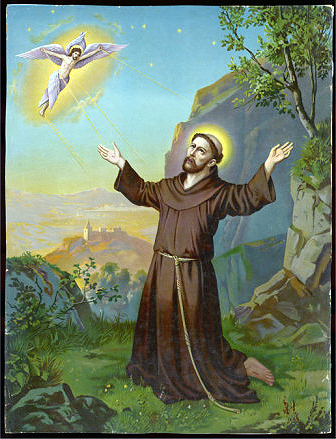
And by the way, about St Francis, his story isn't just now showing the beginning of mythology, it was already showing signs of being mythology way back when. For just one example, the classic image of the stigmata event when Francis saw an angel in the form of a crucifix, with his hands nailed to his own outstretched wings, smacks of ancient Sumerian iconography-



Artifact of a Sumerian goddess-
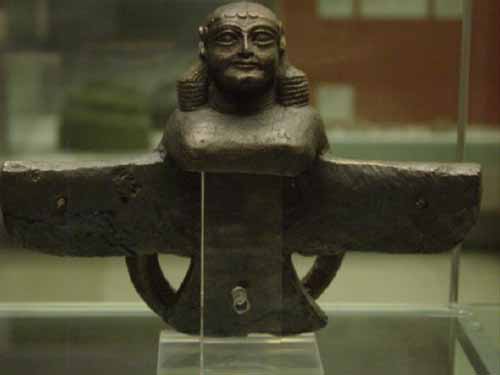
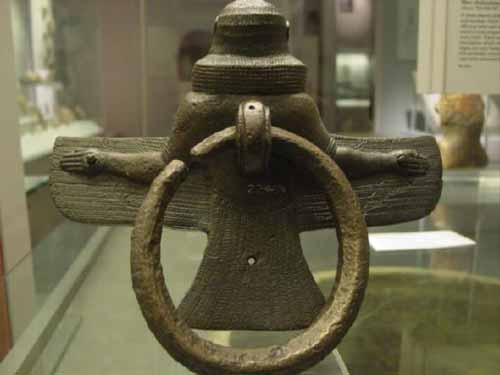
Note that just like in the above images of the stigmata angel, the goddess's hands conspicuously appear to be "nailed" to her own outstretched wings.
Yet it predates the Assisi iconography by millenia.
So from its very beginning the legend of St. Francis has been stained with fingerprints of fictional mythology.
Pagan fictional mythology.
-
Robert Tulip

-

- BookTalk.org Hall of Fame
- Posts: 6502
- Joined: Tue Oct 04, 2005 9:16 pm
- 18
- Location: Canberra
- Has thanked: 2721 times
- Been thanked: 2665 times
- Contact:

Re: Lee Strobel under fire
Speaking of Chinese Whispers, ant may have had in mind the example I mentioned of how myth turns into absolute truth.
Regarding linguistic evolution, in a recent post, I noted that “On the existence of Zeus, people may wish to look at http://en.wikipedia.org/wiki/Dyaus_Pita to see that Zeus is actually exactly the same as Jehovah. Both derive etymologically from the Indian Dyaus Pita, the sky father of the Vedic Pantheon. Greek Zeus Patera = Roman Ju Piter = Christian Deus Pater. None are entities, but rather human efforts to explain the meaning of life.”
I commented earlier here that God is a meme, and the quoted text explains how the God meme has evolved. The etymology of the Latin for “God the Father” can be traced very clearly to pagan roots, also showing the old cultural link between India and Europe. We also see here the stability (copy fidelity) of the main Western term for the sky father, stretching back in time to the Vedic term Pita.
In looking at how religious belief evolves, one way in which the meme differs strongly from the gene is in the stability of the transmission. Genes have strong copy fidelity, only mutating very rarely, with most mutations causing death. By contrast, the mutation of memes is far faster and more various than is generally acknowledged.
Consider the origins of Christianity. The mythicist view is that the Gospels are a fiction that was written in Alexandria with the conscious express purpose of establishing a new religion by inventing a mythical saviour who would press all the buttons needed for mass appeal. Christians maintain that the gospels were written between 70 and 100 AD, but there is no real evidence that they existed before the second or perhaps even the third century.
It is easy to imagine an evolutionary memetic process akin to ‘Chinese whispers’ which turned an original work of fiction into a dogma. A good example of Chinese whispers is the story from the First World War, where an order from the front was passed by word of mouth to the rear, and “We’re going to advance, send us reinforcements” was eventually transmitted as “We’re going to a dance, send us three and fourpence.” People’s hearing and memory and desires are flawed, giving great potential for hearing whatever you want to hear, rather than what is actually said.
In the Christian example, we have to look to the psychology of belief to explain how the Christ meme became the Christian dogma. This psychology is well captured in one of the famous “proofs” of the existence of God – that if we can imagine a perfect being, then a real one is better than an imaginary one so a real one must exist. (I kid you not, this is one of the main pieces of “logic” of Anselm). Anyway, exactly the same psychological logic applies to Jesus, that if we can imagine a perfect messiah, then a real messiah is so much better and therefore exists.
Trying to recreate how this meme may have evolved, the religious scholars of Alexandria had a strong agenda to imagine a better world than the Roman Empire. We can imagine their original thought processes, building on the prophecies of the Old Testament. Starting from ‘if only we had a messiah, this is what he would have been like’, the oral transmission of these messianic stories occurred over centuries before they found their final form. Conceivably, the first tellers meant the stories as myth. However, it is well known that a tale improves in the telling. As hearers tell a good story to others, they steadily embroider it. A very useful first embroidery, when you have a political agenda, is that the fantasy you heard is an actual story of events. If, as stated in John 20:31 the agenda is that “these are written that you may believe that Jesus is the Christ, the Son of God” then clearly the agenda is not to provide an accurate record of events, but rather whatever will be most conducive to spreading belief.
So the idea of the meme as an evolving and mutating idea is very helpful to interpret the origins of Christianity. A key point is that in an oral culture, the weight of moral stories is increased by falsely claiming that invented fictions are historically based. This would go through several stages, each of which could last decades as the view of a community –
1. I know its false;
2. I heard that it is false;
3. I don’t know if its true or false;
4. It may be true;
5. It is probably true
6. It is definitely true
7. If you so much as ask if it is true you are a heretic and blasphemer and will go to hell.
This last dogmatic imperial phase is expressed in the Bible, with the statement at 1 John 4:2 “This is how you can recognize the Spirit of God: Every spirit that acknowledges that Jesus Christ has come in the flesh is from God. Every spirit that does not acknowledge Jesus is not from God but is the spirit of the antichrist.”
So the Christian meme became that belief in the story of the incarnation was a test of faith. Pagans such as Celsus regarded this Christian method with contempt, as there was no historical evidence that Jesus lived. However, history shows that this meme of the Word made Flesh proved more powerful than pagan logic, and produced the Dark Ages. This meme of blind faith is only now unravelling at the popular level.